
Cinema Comfort at Home
Home theater seating is one of the most important parts of a private cinema room. A home theater may have a large screen, a powerful sound system, acoustic wall panels, controlled lighting and a refined interior design, but the viewer experiences the entire movie from the seat. If the seating is uncomfortable, too large for the room, poorly positioned or not suitable for long viewing sessions, the whole cinema experience becomes weaker.
A professional home theater seat should provide comfort, support, personal space and a true cinema feeling. Unlike ordinary living room furniture, home theater seating should be planned according to screen distance, viewing angle, speaker placement, row spacing, room size, acoustic balance and user expectations. The right seating can turn a simple media room into a private cinema environment.
Home theater seating can include single recliners, double seats, cinema sofas, motorized recliners, manual recliners, VIP cinema seats, leather seating, fabric seating, cup holders, tray tables, storage consoles and custom layouts. The best solution depends on the room size, number of users, preferred comfort level and design style.
Home Theater Seating for Private Cinema Rooms
A private cinema room needs seating that supports both comfort and atmosphere. The room should feel different from a normal living room. The seat should help the viewer relax, focus on the screen and enjoy the movie without physical discomfort.
Home theater seats should be selected according to the room’s real dimensions. A large recliner may look impressive, but if the room is small, it can reduce walking space and create an uncomfortable screen distance. A compact seat may save space, but it may not create the premium cinema feeling expected from a private theater.
A good home theater seating plan balances comfort, screen visibility, acoustic layout and movement. The viewer should be able to sit naturally, recline if needed, reach cup holders easily and watch the screen without neck strain.
Home Cinema Recliners
Home cinema recliners are among the most popular options for private theater rooms. They allow the user to lean back, extend the legs and enjoy movies in a more relaxed position. Recliner seating is suitable for luxury villas, private screening rooms, media rooms and high-end entertainment spaces.
A recliner seat should move smoothly and support the body in both upright and reclined positions. The footrest, backrest, head support and cushion structure should work together. If the recliner is too soft, too narrow or poorly angled, long movies can become uncomfortable.
Recliner seating requires correct room planning. When the footrest opens, there must be enough space in front of the seat. If multiple rows are used, the rear row should still have a clear view of the screen. The reclined position should be considered from the beginning.
Motorized Home Theater Seats
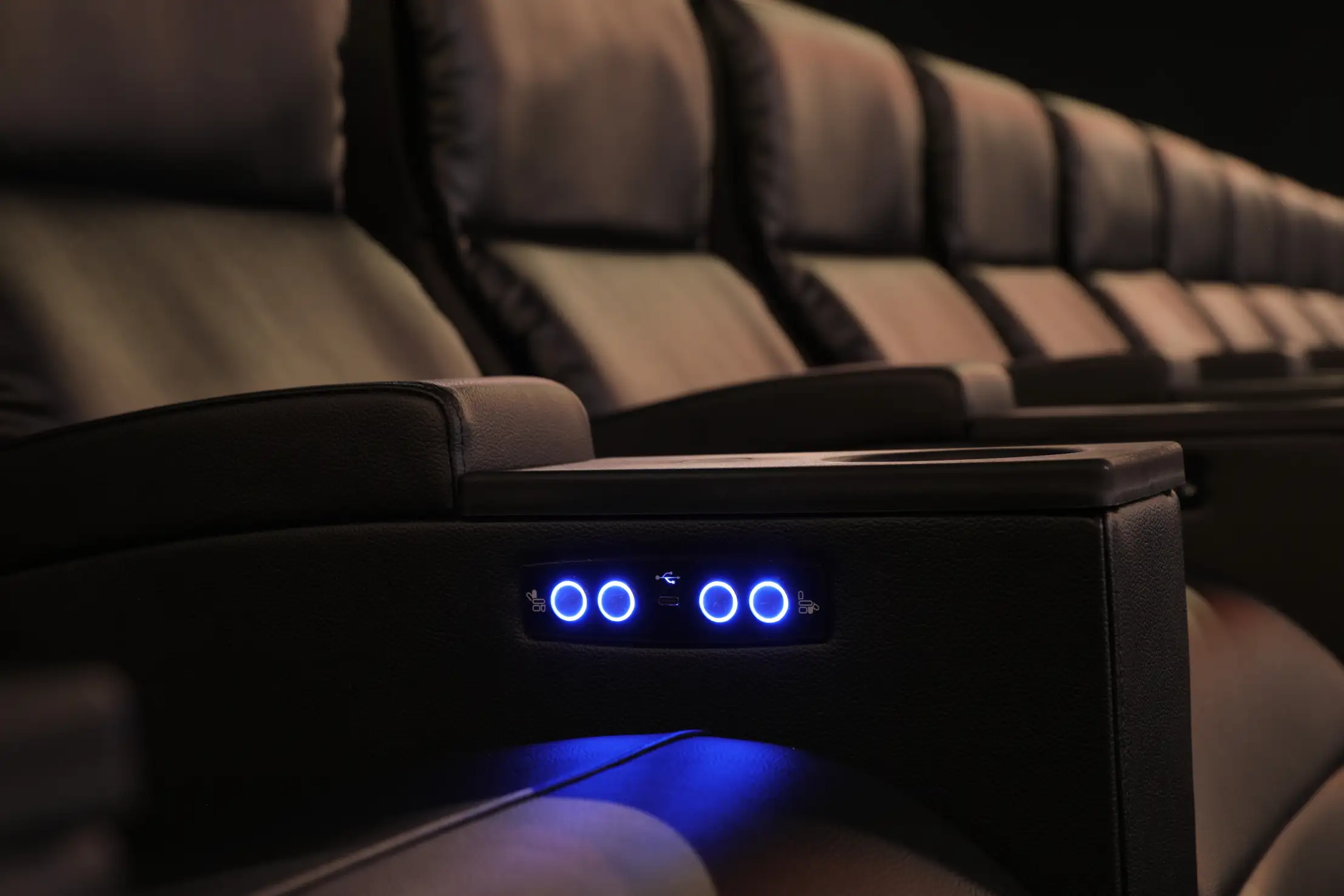
Motorized home theater seats provide a premium viewing experience with button-controlled movement. The user can adjust the backrest and footrest easily, creating a more personal seating position.
Motorized recliners are ideal for luxury home cinemas, private screening rooms and residential entertainment spaces where comfort is a priority. They can include additional features such as cup holders, tray tables, side consoles and integrated controls.
The electrical system should be planned carefully. Power access, cable routing and service access should be considered before installation. A premium room should not have visible or disorganized cables. Clean technical planning helps protect the luxury feeling of the space.
Manual Recliner Seating
Manual recliner seating is a practical option for home theaters that need reclining comfort without electrical infrastructure. These seats can operate through body pressure, side handles or mechanical systems.
A manual recliner should be easy to use. The user should not need excessive force to open or close the seat. The movement should feel stable and controlled. If the mechanism is difficult, noisy or unstable, the seat will not feel suitable for a private cinema room.
Manual recliners can offer a strong balance between comfort, simplicity and price. They are suitable for smaller home theaters, private media rooms and projects where simple maintenance is preferred.
Home Theater Sofas
Home theater sofas create a softer and more social cinema experience. They are useful for family movie rooms, private entertainment spaces and relaxed media rooms where users want a lounge-like atmosphere.
A cinema sofa can include wide cushions, cup holders, armrests, central consoles, reclining functions and custom upholstery. It should feel comfortable, but it should also support long viewing sessions better than ordinary living room furniture.
The size of the sofa must match the room. Oversized sofas can make a small room feel crowded. Compact sofas may work better when the screen distance is limited. The goal is to create comfort without damaging movement, visibility or acoustic balance.
Double Home Theater Seats
Double home theater seats are ideal for couples, families and private viewing rooms. They create a more personal and social seating arrangement while still keeping a cinema-style structure.
Double seats may include shared armrests, separate recliner mechanisms, cup holders, tray tables or central consoles. Each user should have enough space and support. If the seat is too narrow or the recliner movement is not planned well, comfort may be reduced.
These seats are especially suitable for boutique-style private cinemas and luxury residential screening rooms. They help create a warmer and more intimate cinema atmosphere.
VIP Home Theater Seating
VIP home theater seating creates a more premium and refined private cinema experience. These seats are usually wider, softer and more visually detailed than standard cinema seating. They may include leather or high-quality fabric upholstery, large armrests, cup holders, tray tables, motorized movement and custom finishes.
A VIP home theater seat should feel luxurious without becoming oversized for the room. Comfort, layout and proportion must work together. A seat that is too large can reduce the quality of the room if it blocks movement or creates a poor viewing angle.
VIP seating is ideal for villas, luxury apartments, private clubs, boutique screening rooms and high-end entertainment areas.
Leather Home Theater Seats
Leather home theater seats can create a premium and elegant appearance. They are often selected for luxury private cinema rooms, villas and executive entertainment spaces.
Leather offers a refined visual character, but it should be selected according to the room’s use and maintenance expectations. Real leather can feel luxurious, while artificial leather may provide easier cleaning in some projects. The right choice depends on budget, climate, usage frequency and design style.
Dark leather tones such as black, brown, anthracite and deep burgundy can create a strong cinema atmosphere. The material should also work with lighting, wall panels, carpet and acoustic surfaces.
Fabric Home Theater Seats
Fabric home theater seats create a warmer and softer room feeling. They can be suitable for family cinema rooms, boutique private theaters and acoustic-focused spaces.
Fabric can help the room feel more comfortable and less formal than leather. It can also support a softer acoustic environment. However, fabric quality is important. The upholstery should resist wear, maintain color and be suitable for cleaning.
Color selection should match the room concept. Dark grey, navy, burgundy, black and deep green can create a cinematic atmosphere. Lighter colors may work in modern homes, but they usually require more careful maintenance.
Cup Holders and Consoles
Cup holders and consoles are small details that strongly affect the home theater experience. A good seat should allow the user to keep drinks, snacks, remotes or small items within easy reach.
Cup holders should be stable, easy to clean and positioned naturally. Consoles can include storage areas, tray tables, control buttons or additional comfort features. In luxury home theater seating, these details help create a complete cinema feeling.
The design should remain clean. Too many visible accessories can make the seating look heavy. The best solution is practical, comfortable and visually balanced.
Tray Tables and Accessories
Tray tables can make home theater seating more functional. They are useful for snacks, drinks, small devices or personal items. In private screening rooms, tray tables can support a more relaxed and premium experience.
The tray table should be stable and easy to use. It should not block the user when entering or leaving the seat. If the table is connected to a recliner, it should not interfere with the movement mechanism.
Accessories should be selected according to real use. A family media room may need practical storage and cup holders. A luxury screening room may prefer more refined tray tables and hidden controls.
Row Planning
Home theater seating layout is one of the most important parts of the project. The seat must fit the room, but the room must also support the seat. Screen distance, row height, walking space, door position and speaker layout should all be reviewed.
If the room has one row, the seat should be placed at a comfortable viewing distance from the screen. If the room has two or more rows, the rear rows may need a riser platform to protect visibility. Recliner movement must also be calculated.
A good layout allows every viewer to see the screen comfortably. The room should feel spacious, not crowded.
Viewing Angle
The viewing angle determines whether the screen feels natural and comfortable. If the seat is too close, the viewer may need to move the head too much. If it is too far, the cinema effect may become weaker.
The seat height, back angle, screen size and viewing distance should work together. In recliner seating, the viewing angle should be checked in both upright and reclined positions. A viewer should not need to lift the head unnaturally while relaxing.
A successful home theater seating plan makes watching feel effortless.
Acoustic Relationship
Home theater seating is connected to room acoustics. Upholstery, cushion density, seating layout, carpets, acoustic panels and wall surfaces all affect sound behavior. A great private cinema needs both comfortable seating and controlled sound.
Fabric seating can contribute to a softer acoustic feeling. Leather or artificial leather may behave differently in the room. The seating should be planned with speakers, acoustic panels and floor materials.
A private theater should not only look like a cinema. It should also sound clear, balanced and immersive.
Room Size and Seat Selection
Room size is one of the main factors in home theater seating selection. A small media room may need compact recliners or a carefully sized sofa. A large private cinema room can use wider VIP seats, multiple rows or double recliners.
Oversized seating can reduce comfort if it blocks movement or creates a poor viewing distance. Too many seats can make the room feel crowded. In a private theater, fewer well-planned seats often create a better experience than too many poorly placed seats.
The seating should match the room, not overpower it.
Single Row Home Theater Rooms
Single row home theater rooms are common in smaller private spaces. These rooms can use recliners, sofas, double seats or compact VIP cinema seats depending on the room size.
In a single row layout, screen distance and speaker position are critical. The seats should be centered according to the screen and placed so the viewer has a natural eye level. Recliner movement should not interfere with doors, walls or equipment.
A well-planned single row room can feel very premium if the seating is comfortable and proportionate.
Multi-Row Home Theater Rooms
Multi-row home theater rooms create a more professional cinema feeling. They are suitable for larger villas, private clubs, luxury entertainment rooms and residential screening spaces.
In multi-row layouts, rear rows often need elevation. A riser platform can help viewers see over the front row. Seat height, backrest height, screen size and floor level should be planned together.
Recliner seats need additional attention in multi-row rooms. When the front row reclines, it should not block the view or movement of the rear row. The layout should be tested before final installation.
Private Screening Rooms
Private screening rooms are used in villas, hotels, offices, studios, clubs and high-end entertainment spaces. These rooms need seating that feels premium, comfortable and suitable for long viewing sessions.
The seating may include motorized recliners, leather VIP seats, double seats, cinema sofas or custom upholstered models. The design should match the room’s atmosphere and technical planning.
Private screening rooms usually need a more refined approach than ordinary media rooms. The seating should feel special without sacrificing functionality.
Media Room Seating
Media rooms are more flexible than dedicated cinema rooms. They may be used for movies, gaming, sports viewing, family entertainment or casual gatherings. Seating in these rooms should support different activities.
A media room may use recliners, sofas or modular seating depending on the lifestyle of the users. Comfort and flexibility are important. The seating should not make the room feel too formal if the space is used daily.
However, even in a casual media room, proper viewing angle and comfort should be considered. Good seating improves the room’s everyday value.
Gaming and Entertainment Seating
Home theater seating can also support gaming and entertainment rooms. In these spaces, users may spend long hours seated, so comfort and posture are important.
Recliners can provide comfort for long sessions, while sofas may support group gaming or sports viewing. Cup holders, storage consoles and tray tables can make the room more practical.
The seating should be placed according to screen size and sound system. A gaming room may need a different posture and distance than a classic movie room.
Upholstery and Color Planning
Upholstery and color strongly affect the atmosphere of a home theater. Dark colors are often preferred because they reduce visual distraction and support a cinema feeling. Black, anthracite, dark brown, burgundy, navy and deep grey can work well.
The upholstery should match the room’s lighting, carpet, wall panels and acoustic materials. A luxury room may use leather or refined fabric. A family room may need easier-cleaning materials.
Color should also be practical. Very light colors can look modern, but they may require more maintenance in a room used for snacks and drinks.
Foam and Long-Term Comfort
Foam quality determines whether a home theater seat remains comfortable after years of use. A seat may look soft and attractive at first, but weak foam can lose shape, collapse or reduce support over time.
A good home theater seat should provide balanced comfort. The seat cushion, backrest, head support and footrest should support the body together. Comfort should last through long movies, sports events and extended entertainment sessions.
For recliners and VIP seats, foam quality is especially important because users expect a higher level of comfort.
Cleaning and Maintenance
Home theater seating should be easy to clean and maintain. Drinks, snacks, dust and frequent use can affect the seat over time. Cup holders, armrests, consoles, upholstery and moving parts should be accessible for cleaning.
Leather and artificial leather may be easier to wipe in some cases. Fabric can feel warmer, but it should be selected with cleaning in mind. Recliner mechanisms should also remain accessible for inspection and maintenance.
A seat that is difficult to clean can lose its premium appearance quickly. Practical maintenance protects the room’s long-term value.
Custom Home Theater Projects
Custom home theater projects require seating that matches the room size, interior concept and user preferences. Seat dimensions, upholstery, colors, armrests, cup holders, consoles and recliner options can be selected according to the project.
Custom planning is especially important when the room has unusual dimensions, multiple rows, special acoustic design or a luxury interior concept. The seating should not be treated as a final accessory. It should be planned together with the room.
A customized seating approach helps create a private cinema that feels complete, comfortable and personal.
Manufacturer-Based Supply
Manufacturer-based home theater seating supply gives project teams better control over details. Seat model, upholstery, color, recliner mechanism, cup holder, console, tray table and layout suitability can be evaluated according to the project.
This is important for private cinemas where comfort and finish quality matter. Controlled production supports consistency, better customization and a more professional final result.
Quality and Price Balance
Home theater seating should not be selected only by the lowest price. A weak seat may lose comfort, show upholstery wear, create recliner mechanism problems or reduce the premium feeling of the room. A durable and comfortable seat provides stronger long-term value.
The correct approach is to evaluate comfort, upholstery quality, foam stability, recliner mechanism, room suitability and price together. A home theater seat should improve the viewing experience and keep the room looking professional for years.
A strong quality-price balance is especially important in custom private cinema projects where every detail affects the final atmosphere.
Complete Home Theater Seating Categories
Home theater seating projects may include motorized recliners, manual recliners, VIP cinema seats, double seats, cinema sofas, leather theater seats, fabric theater seats, private screening room seats, media room seating, family cinema seating and custom residential entertainment seating.
Each category serves a different purpose. The right selection depends on room size, comfort expectation, screen distance, design style, user habits and long-term maintenance needs.
Conclusion
Home theater seating is central to the comfort, atmosphere and long-term value of a private cinema room. The right seating solution improves viewing comfort, supports room design, protects sightlines, works with acoustics and creates a more complete entertainment experience.
A successful home theater seating project requires ergonomic comfort, suitable upholstery, reliable recliner mechanisms, correct room layout, practical cleaning and a strong balance between quality and price. When seating is selected according to the real dimensions and use of the room, the result is a private cinema that feels comfortable, refined and professional.
For professional home theater seating solutions, visit the official website.